

The game of golf has experienced significant growth over the past year and a half. Countless people of all ages and abilities have flocked to the golf course to start a new hobby and form of exercise. Take enough swings and you’ll soon realize that the sport asks a lot of your body. This sport requires hand-eye coordination, strength, power, mobility, and flexibility, not to mention an incredible level of mental fortitude.
Training for any sport can seem like an overwhelming task, especially if you don’t know where to start. Focusing on strength training and mobility drills will help you improve your Golf Game.
Strength & Mobility Training
In any sport, having a solid strength base and the ability to move your body are what drive athletic performance. If you have knee pain, running down a basketball court may get more and more uncomfortable as a pick-up game progresses. The same goes for golf.
Strength Training For Golf
Strength Training for Golf is simple; you want to make sure you’re training all of your joints and taking them through a full range of motion. For golf, we’ll be focusing on a press, a row, a squat, a hinge, and a twist.
The Press
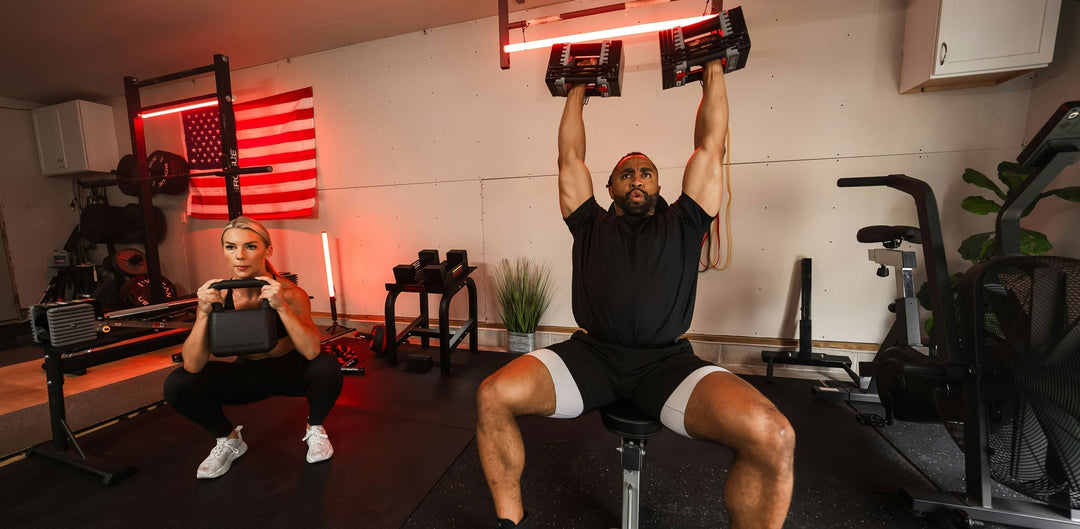
For our pressing movement, we’ll be performing a Lunge Stance Shoulder Press. This movement blends lower-body stability with upper-body strength, challenging balance while building shoulder power. It’s excellent for developing core control and functional pressing strength in a staggered stance.
Step 1: Step one foot back into a lunge stance, hips squared, core braced, dumbbells at shoulder height.
Step 2: Lower into a stable lunge (or hold the lunge), keeping weight centered and torso tall.
Step 3: Press both dumbbells overhead until arms are straight, then lower with control while maintaining the lunge stance.

The Row
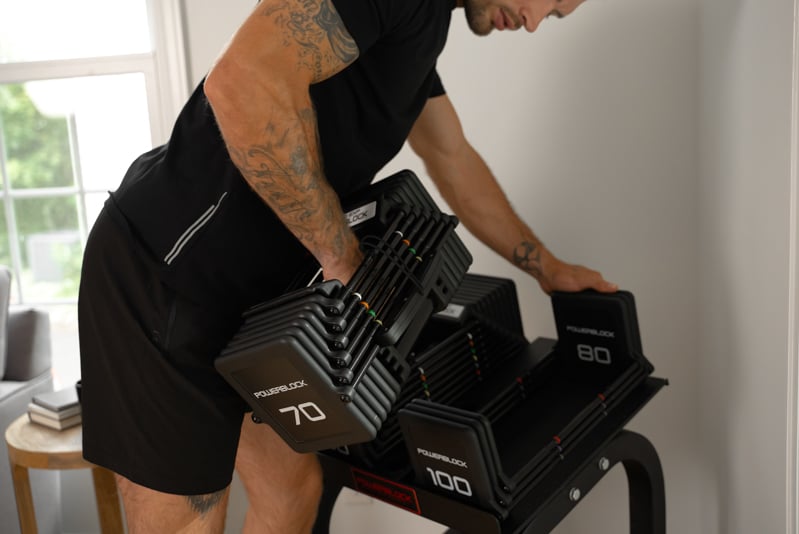
For our rowing movement, we’ll be performing a bent-over dumbbell row. This back-focused pull strengthens the lats, upper back, and posterior chain while reinforcing proper hip-hinge positioning. It’s a staple for improving posture and building balanced upper-body strength.
Step 1: Stand with feet hip-width apart, hinge at the hips with a flat back, dumbbells hanging under your shoulders.
Step 2: Brace your core and keep your chest facing the floor without rounding.
Step 3: Pull the dumbbells toward your ribs, pause briefly, then lower with control.

The Squat
For our squat, we’ll be performing a dumbbell front squat. This variation loads the front of the body, encouraging an upright torso and deeper squat mechanics. It builds strong quads, glutes, and core while improving overall squatting technique.
Step 1: Hold dumbbells at shoulder height (rack position), feet shoulder-width apart, chest lifted.
Step 2: Sit down and back into a squat, keeping elbows high and heels grounded.
Step 3: Drive through your feet to stand tall, keeping the dumbbells steady at the shoulders.

The Hinge
For our hinging movement, we’ll be performing a single leg deadlift. This is a unilateral, or single-sided, hip-hinge pattern. This move targets the hamstrings and glutes while improving balance and stability. It also helps address strength imbalances and reinforces proper deadlift mechanics.
Step 1: While holding a dumbbell in the hand of the working leg, place the non-working leg slightly behind you.
Step 2: Hinge forward from the hips, keeping your spine long and front knee softly bent allowing the back leg to swing back in line with the torso.
Step 3: Drive through the front foot to stand back up, squeezing your glutes at the top.

The Twist
Finally, for our twisting movement, we’ll be performing dumbbell woodchoppers. This dynamic swing trains power through the hips while adding a rotational core challenge. It helps build explosive strength, coordination, and athletic movement patterns.
Step 1: Stand with feet wider than hips, hold one dumbbell with both hands, arms extended.
Step 2: Hinge at the hips and rotate slightly toward one side, letting the dumbbell swing between your legs.
Step 3: Drive through your hips to stand and rotate toward the opposite side, guiding the dumbbell up diagonally; repeat in a smooth rhythm.

Mobility Training For Golf
In golf, smooth, efficient movement is just as important as strength when it comes to generating power and consistency. If your hips or thoracic spine are tight, every swing can feel a little more restrictive and unpredictable as the round goes on. Improving mobility helps you rotate more freely, strike the ball with better mechanics, and keep discomfort from creeping in as you play. For mobility, we’ll be focusing on 6 stretches: a calf stretch, a Hamstring stretch, a figure 4 stretch, a quad stretch, a chest stretch, and finally a shoulder stretch.
Calf Stretch
This stretch helps loosen the muscles along the back of your lower leg so your ankles can move more freely. Better calf mobility supports smoother walking, running, and squatting mechanics.
Step 1: Place the ball of your foot on a stair while facing the staircase, keeping your other foot on the ground.
Step 2: Let your heel drop toward the floor using your body weight.
Step 3: Hold the stretch, then return your foot to level before repeating and switching sides.

Hamstring Stretch
This movement targets the large muscles along the back of your thigh, improving flexibility and reducing tension that can limit your hinge and stride. It’s especially helpful for easing tightness from long periods of sitting.
Step 1: Lie on your back and loop a resistance band around the arch of one foot.
Step 2: Keep your leg straight as you gently pull it upward toward your torso, maintaining steady tension.
Step 3: Hold the stretch, lower your leg, and repeat before switching sides.

Figure Four Stretch
This stretch opens the hips and glutes, areas that often get tight from training or daily posture. Improving this mobility can help relieve lower-back pressure and enhance rotational movement.
Step 1: Lie on your back and bend one knee, then cross your opposite ankle over it.
Step 2: Reach through and grab the back of your bent leg with both hands.
Step 3: Pull your leg toward your torso to feel the stretch, then repeat and switch sides.

Quad Stretch
This stretch lengthens the muscles on the front of your thigh, helping counteract tightness from sitting or heavy leg work. Better quad mobility supports knee comfort and smoother lower-body movement.
Step 1: Stand tall and use a wall or door frame for support.
Step 2: Grab your ankle on the same side and gently pull your heel toward your glutes.
Step 3: Hold the stretch, release, and repeat on the other side.

Chest Stretch
This stretch helps open the front of your shoulders and chest, which commonly tighten from desk work and lifting. Improving flexibility here supports better posture and overhead mobility.
Step 1: Stand in a doorway and place one forearm and upper arm against the door frame with your elbow bent.
Step 2: Keep your hand behind your head as you set your arm in place.
Step 3: Turn your body away from the doorway to open the chest, then switch sides.

Shoulder Stretch
This stretch targets the back of the shoulder, helping release tension that can restrict arm movement. Increasing mobility in this area supports healthier pressing, pulling, and rotational patterns.
Step 1: Reach one hand behind your back toward your shoulder blade.
Step 2: Place your opposite hand on the elbow of the stretching arm.
Step 3: Turn your head toward the stretching side and gently pull the elbow downward, then switch arms.

Putting it all Together
Now that we’ve gone over the exercises and stretches you should perform to improve your golf game, it’s time we put it together in an easy-to-follow workout.
The Workout: Weight Training
|
Exercise |
Sets |
Reps |
|
Lunge Stance Shoulder Press |
2-4 |
8-12 |
|
Bent Over Row |
2-4 |
8-12 |
|
Front Squat |
2-4 |
8-12 |
|
Split Stance Deadlift |
2-4 |
8-12 |
|
Rotational Dumbbell Swings |
2-4 |
8-12 |
Perform this workout 2-3 times per week. Record the weights you are moving, and challenge yourself by increasing the weight you’re moving each workout. This will help you build strength and stamina.
The Workout: Stretching
|
Body Part |
Sets |
Time in Stretch |
|
Calf Stretch |
2-3 |
6-10 sec. |
|
Hamstring Stretch |
2-3 |
6-10 sec. |
|
Figure Four Stretch |
2-3 |
6-10 sec. |
|
Quad Stretch |
2-3 |
6-10 sec. |
|
Chest Stretch |
2-3 |
6-10 sec. |
|
Shoulder Stretch |
2-3 |
6-10 sec. |
Perform these stretches after each workout and each round of golf you play. Pay attention to your performance in the gym and on the course. Take note of what feels tight. From there, add more sets or time in each stretch. For example, if your lower back is feeling tight, increase the time spent in both your hamstring and figure 4 stretch to help loosen your lower back.
In the end, your body will thank you for the extra training, and your gold game should improve.