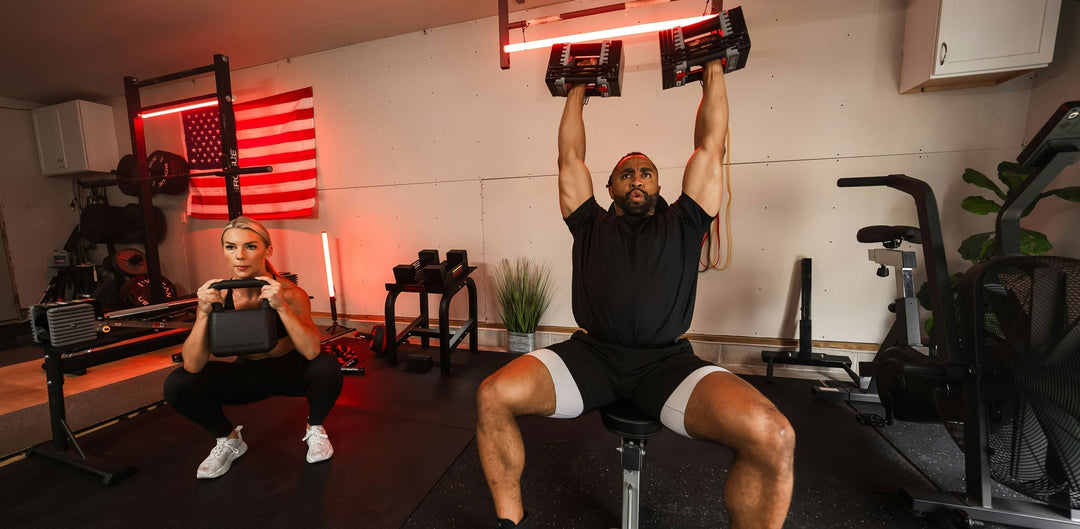
Muscle imbalances are not something to be afraid of. Most people have them, but just because you have them doesn’t mean you can’t fix them.
What Are Muscle Imbalances?
Muscle imbalances are simple: they're differences in strength, stability, and mobility between the left and right sides of the body. Often, the dominant side of the body is the stronger, more stable, and more mobile side. Meaning, if you’re right-handed, your right side will be stronger than your left, and vice versa.
Strength Imbalances
Strength imbalances are simple; one side of your body is stronger than the other. For example, let’s say you’re performing a dumbbell bench press with 80 lbs, but you’re used to barbell bench presses. You’ll notice that your dominant side can move the weight more easily and for more reps compared to your non-dominant side. In this particular movement, you have a strength imbalance.
Stability Imbalances
Stability imbalances are similar to strength imbalances, but don't deal with moving the weight. Stability imbalances involve how you secure the weight and hold the load. Your dominant side will have an easier time with this action compared to your non-dominant side.
Mobility Imbalances
Mobility imbalances deal with how you move through space. Whether you’re squatting, benching, rowing, deadlifting, or even stretching, you’ll notice a difference in how each side of your body moves. One side will most likely be more flexible than the other and can move through ranges of motion more easily.

Why Barbells Often Hide Imbalances
Barbells are one of the best tools for building overall strength. They allow you to move heavier loads, track progress easily, and perform foundational movements like the squat, bench press, and deadlift. But when it comes to identifying muscle imbalances, barbells have a limitation.
A barbell distributes weight evenly across both sides of the body, regardless of how much effort each side contributes. If one side is stronger, more stable, or more coordinated, it can quietly take on more of the work without you noticing.
Take the bench press as an example. If your right arm is stronger than your left, the bar will still move upward. Your stronger side simply helps more, allowing the weaker side to keep up. The same thing can happen during squats, where one leg may push harder than the other, or during deadlifts, where one side of the body may produce more force throughout the lift.
The challenge is that progress can still happen. You may add weight to the bar and get stronger overall, but the underlying imbalance remains. In some cases, the gap between sides can gradually increase over time.
That doesn't mean barbells are bad. In fact, they're one of the most effective tools for developing maximal strength. The issue is that barbells alone may not reveal asymmetries that could eventually affect movement quality, performance, or injury risk. For complete strength development, barbells and dumbbells often work best together.

How Dumbbells Expose (and Correct) Muscle Imbalances
Unlike a barbell, dumbbells require each side of the body to work independently.
When you perform a dumbbell press, row, or squat variation, your stronger side can't easily assist the weaker side. Each arm or leg must control its own weight through the entire movement.
This independence quickly reveals weaknesses that may have been hidden during bilateral exercises. If one arm struggles to stabilize a dumbbell or one leg has difficulty maintaining balance, you'll notice it immediately.
That's exactly why dumbbells are so effective for correcting imbalances.
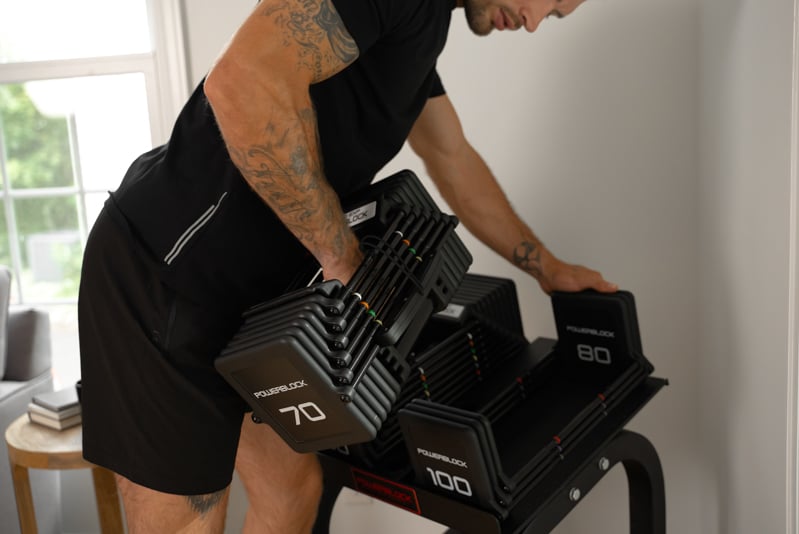
This is one reason adjustable dumbbells are popular for imbalance training. They allow you to make small weight adjustments as each side develops, making it easier to progress gradually while maintaining proper form and control.
At first, progress may feel slower. You might need to use lighter weights than you're accustomed to with a barbell. However, this slower progression often leads to better movement quality, improved joint control, and more balanced strength in the long run.

Unilateral Training Explained (Without the Jargon)
Unilateral training simply means training one side of the body at a time.
That could mean pressing with one arm, loading one leg, or carrying weight on only one side of the body. While it sounds simple, unilateral training challenges the body in ways that traditional bilateral exercises cannot.
When only one side is working, your muscles must generate force while your core and stabilizing muscles work to keep your body aligned. This improves coordination and control while exposing weaknesses that may otherwise go unnoticed.
Many people associate unilateral training with physical therapy or rehabilitation. While it's commonly used in those settings, it's valuable for anyone who wants to build balanced strength.
Athletes often use unilateral training to improve performance because most sports involve producing force from one side of the body at a time. Runners push off one leg with every stride. Throwing athletes generate power primarily from one side. Even everyday activities like climbing stairs or carrying groceries rely heavily on unilateral strength.
When used consistently, unilateral training can improve movement quality, reduce compensation patterns, and help build long-term strength that carries over into both sports and daily life.

Best Dumbbell Movements for Fixing Imbalances
Not every exercise is designed to address muscle imbalances. The following movements are especially effective because they force each side of the body to contribute independently.
Upper Body
Single-Arm Dumbbell Press
-
What imbalance it addresses: Strength and stability differences between the left and right arms and shoulders.
-
Why dumbbells work better: Each arm must press its own weight without assistance from the stronger side.
-
Form cue: Keep your shoulder blades pulled back and maintain control throughout the entire press.

Single-Arm Row
-
What imbalance it addresses: Uneven upper back and pulling strength.
-
Why dumbbells work better: Each side works independently, making it easier to identify weaknesses in back strength and control.
-
Form cue: Pull your elbow toward your hip instead of shrugging your shoulder upward.

Lower Body
Bulgarian Split Squat
-
What imbalance it addresses: Strength, stability, and mobility differences between the legs.
-
Why dumbbells work better: Each leg must produce force on its own rather than sharing the workload.
-
Form cue: Keep your front foot planted and drive through the middle of the foot as you stand.

Single-Leg Romanian Deadlift (RDL)
-
What imbalance it addresses: Balance, hip stability, and posterior chain strength.
-
Why dumbbells work better: The movement challenges each leg independently while exposing stability weaknesses.
-
Form cue: Keep your hips square and move slowly through the lowering phase.
Core and Stability
Single-Arm Farmer Carry
-
What imbalance it addresses: Core stability and side-to-side strength differences.
-
Why dumbbells work better: The uneven load forces the core to resist leaning or twisting.
-
Form cue: Stand tall and keep your shoulders level while walking.
Offset Goblet Squat
-
What imbalance it addresses: Core control, balance, and squat mechanics.
-
Why dumbbells work better: Holding the weight slightly off-center challenges stabilizing muscles that are often overlooked during barbell squats.
-
Form cue: Keep your torso upright and resist shifting toward the loaded side.
How to Program Dumbbells to Fix Imbalances
Correcting imbalances isn't about constantly training the weaker side harder. It's about creating consistent opportunities for both sides to develop evenly.
Match Reps, Not Weight
Always let the weaker side set the standard.
If your left arm can perform eight quality reps while your right arm can perform ten, stop both sides at eight. This prevents the stronger side from continuing to widen the gap.
Control the Tempo
Slowing down each repetition improves body awareness and increases time under tension.
Focus on controlled lowering phases and avoid using momentum to complete the movement. Better control often reveals weaknesses that faster reps can hide.
Progress Load Slowly
Resist the urge to increase weight too quickly.
The goal is not simply to lift heavier dumbbells. The goal is to develop balanced strength, stability, and movement quality. Gradual progression allows both sides to improve together.

When to Use Dumbbells vs. Barbells (Not Either/Or)
The debate between dumbbells and barbells often misses an important point: both tools serve different purposes.
Dumbbells excel at improving balance, coordination, stability, and symmetry. They help identify weaknesses, improve movement quality, and encourage equal contribution from both sides of the body.
Barbells excel at developing maximal strength and loading efficiency. They allow you to move heavier weights and are incredibly effective for building overall strength.
The most effective training programs typically use both.
For many home gym owners, adjustable dumbbells make it practical to include more unilateral training without needing an entire rack of weights. They provide the flexibility to perform a wide variety of corrective and strength-building exercises while taking up less space than a full dumbbell set.
Rather than choosing one over the other, think of them as complementary tools that work together to create stronger, more resilient athletes and lifters.

Balanced Strength Is Stronger Strength
Muscle imbalances are normal, but they shouldn't be ignored.
Over time, differences in strength, stability, and mobility can affect performance, movement quality, and even increase the likelihood of injury. The good news is that identifying and correcting imbalances doesn't require complicated training methods.
Dumbbells provide a simple and effective solution by forcing each side of the body to work independently. They expose weaknesses that barbells often hide and create opportunities for more balanced development.
That doesn't mean you should stop using barbells. It means you should use the right tool for the right job.
When dumbbells and barbells are combined strategically, you get the best of both worlds: balanced strength, improved movement quality, and the ability to continue getting stronger for years to come.