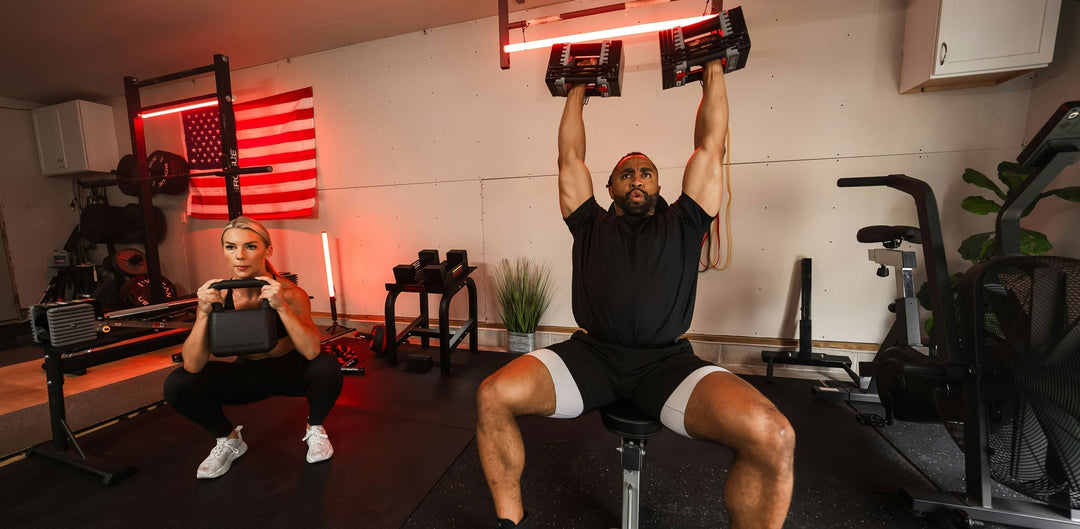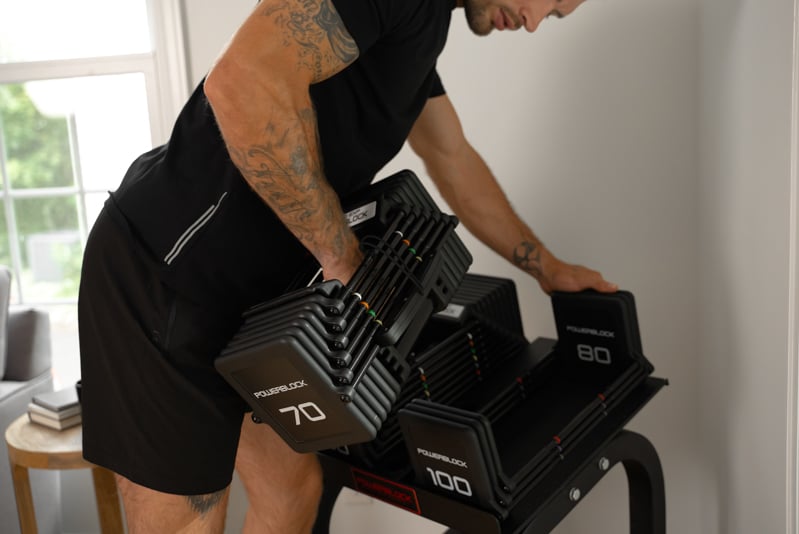


Like any other muscle, the abdominal muscles, or abs, need stimulus to grow and become stronger. This means that over time, as our abs get stronger, the weight we are moving with our abs is getting heavier. Similar to a bench press, a squat, or rows, for example. Using Adjustable Dumbbells is an effective way to train your abs.
How Dumbbells Improve Ab Training
When it comes to ab training, we need to look at the two variables most people incorporate into their ab routines: Bodyweight and Added Weight.
Bodyweight
Bodyweight ab workouts help with building strength and endurance when you haven’t trained abs specifically before. Starting with bodyweight will help with:
-
Building endurance to assist with body weight movements like deadlifts, rows, and squats.
-
Getting the abs used to isolation exercises.
-
Start building the abs to show
As you progress through body weight and gain strength, you’ll start to notice that your form stays more consistent in your compound lifts like rows, deadlifts, and squats. This inturn will help increase the weight you’re moving for those movements and become stronger in them.
Weighted Ab Training
Just like with any muscle group, weight training the abs will help them grow. This isn’t to say that training abs will make your waist wider, but it will help the abs show over time. With that being said, getting your abs to show isn’t a training-only equation. If a goal of yours is to get your abs to show, decreasing your body fat percentage is another variable.
Weighted ab training helps with:
-
Stronger compound lifts, where bracing one's core is essential for form, like deadlifts, rows, and squats.
-
Getting abs to grow and show more easily.
Dumbbell Ab Training and Progressive Overload
If you’re only training from home and have limited equipment, progressive overload may not seem possible. However, using dumbbells can make progressive overload training possible, especially with PowerBlock’s Adjustable Dumbbells.
Dumbbells, in general, allow for smaller weight increment jumps, allowing your abs to get stronger without straining or injuring the muscle along the way. Using PowerBlock Adjustable Dumbbells keeps your space organized and saves space compared to traditional dumbbells. With the micro-weight adjustments your PowerBlocks are capable of, you’ll be able to slowly increase the resistance (weight) you’re moving as you get stronger, without the worry of overtraining.

Beginner Ab Workout
This workout will be for those who are just starting the strength journey and don’t need to add weight at this time. All you’ll need is 4 movements:
-
The Sit Up
-
The sit-up is a classic for anyone starting to incorporate ab training. The movement targets the rectus abdominis or the "six-pack" muscle.
-
How to perform:
-
Lie on the ground with your back on the floor.
-
Have your knees bent so that your feet are flat on the floor.
-
Place your hands on the back of your head to support your head and neck.
-
Using your abs, raise your torso upward until your shoulder blades are off the ground.
-
The job of the rectus abdominis is to bring the ribs to the hips. Performing a sit-up this way will help isolate the muscle and prevent other muscles from helping.
-
If you have a training partner, have them secure your feet to prevent them from moving too much.
-
Lower your torso back to the floor and repeat.
The sit-up can also be performed on the PowerBench 2.0 using the PowerBench 2.0 Ab Attachment. This combination helps isolate the abs by limiting movement without the need for a partner to hold the feet down. The steps for this movement are similar, but instead of lying on the ground, you set yourself up on the ab attachment.
-
Russian Twist
-
The Russian Twist works both our internal and external obliques, the abdominal muscles responsible for stabilizing our torso when we twist or bend.
-
How to perform:
-
Sit on the floor, sitting up with your feet out in front of you.
-
You can have your feet planted on the ground if you’re just starting to learn this movement, which gives you more stability.
-
For more of a challenge, have your feet floating in the air. This will engage the whole core as you’re performing the movement.
-
Move both hands to one side of your body, twisting as far as you can.
-
Then move your hands to the other side of your body, twisting as far as you can.
-
Repeat this for the desired reps, making sure to perform an even number so that each side of the obliques is worked evenly.
-
Planks
-
Planks are a great exercise for training the whole core, but they specifically target the transverse abdominis. This is the deepest, corset-like abdominal muscle that wraps around the torso, essential for stabilizing the spine, pelvis, and protecting internal organs. Training like this will help improve your posture and strengthen your core.
-
How to perform:
-
Forearm position
-
Similar to a push-up position, but you’re resting in your forearms, closer to the floor, rather than your hands.
-
Squeeze your core muscles to support your body so that nothing but your forearms and toes are touching the floor.
-
Hold this portion for the designated amount of time.
-
Most people start with 30 seconds and increase over time.
-
Dead Bugs
-
Dead bugs are an excellent exercise because they teach you how to keep your back flat and your core tight while your arms and legs are moving. This builds a strong foundation for sports and prevents back pain by training your "six-pack" muscles to stabilize your spine.
-
How to perform:
-
Lie on your back with arms up, legs at a 90-degree angle (shins parallel to the floor).
-
Press your lower back into the floor and brace your abs.
-
Slowly lower your right arm behind your head and your left leg toward the floor. Stop before your lower back arches or lifts.
-
Squeeze your abs to return to the start, then alternate with your left arm and right leg.
|
Exercise |
Sets |
Reps/ Time |
|
Sit Ups |
3 |
15-30 |
|
Russian Twists |
3 |
10-20 |
|
Planks |
3 |
30-60 seconds |
|
Dead Bugs |
3 |
10-20 |

Intermediate Ab Workout
For our Intermediate Ab Workout, we’re going to simply take the beginner workout and add weight to it. You can add weight by grabbing one of your PowerBlock Adjustable Dumbbells or a PowerBlock Adjustable Kettlebell; this way, you’ll be able to add weight to this workout. It doesn’t have to be much to start. As you progress and get stronger, the weight you’re moving will naturally increase.
-
The Weighted Sit Up
-
The weighted sit-up is the same as the body-weight sit-up, but this time we’re adding weight with either a dumbbell or kettlebell.
-
How to perform:
-
Lie on the ground with your back on the floor.
-
Have your knees bent so that your feet are flat on the floor.
-
Grab your dumbbell or kettlebell and hold it in the middle of your chest.
-
Using your abs, raise your torso upward until your shoulder blades are off the ground.
-
The job of the rectus abdominis is to bring the ribs to the hips. Performing a sit-up this way will help isolate the muscle and prevent other muscles from helping.
-
If you have a training partner, have them secure your feet to prevent them from moving too much.
-
Lower your torso back to the floor and repeat.
Similar to the body weight sit-up, the weighted sit-up can be performed on the PowerBench 2.0 using the PowerBench 2.0 Ab Attachment. Be mindful of the weight you are using for the weighted sit-up, as it may be difficult to get into the attachment while holding it, or to lift the weight off the floor while in the attachment. Having a partner for this will be helpful once you've reached a higher strength threshold.
-
Weighted Russian Twist
-
The Weighted Russian Twists are similar to the body-weight Russian Twist, but this time we’re adding weight with either a dumbbell or kettlebell.
-
How to perform:
-
Sit on the floor, sitting up with your feet out in front of you.
-
You can have your feet planted on the ground if you’re just starting to learn this movement, which gives you more stability.
-
For more of a challenge, have your feet floating in the air. This will engage the whole core as you’re performing the movement.
-
Have a single dumbbell or kettlebell on one side of your body.
-
Move both hands to the side of your body where the weight is resting and grab it.
-
Then move the weight to the other side of your body, twisting as far as you can.
-
Repeat this for the desired reps, making sure to perform an even number so that each side of the obliques is worked evenly.
-
Planks Pull Throughs
-
As mentioned before, planks are a great exercise for training the whole core, but they specifically target the transverse abdominis. Adding a dumbbell or kettlebell to this movement will help build stability and balance.
-
How to perform:
-
Push-Up Positon
-
Unlike the standard plank, you’ll want to be up on your hands with your elbows extended for this exercise.
-
Squeeze your core muscles to support your body so that only your hands and toes touch the floor.
-
Have a weight on either side of your body.
-
With the hand that doesn’t have the weight near it, grab the weight and pull it to the opposite side of your body.
-
Repeat for time or reps
-
Time: Similar to standard planks, start doing this for 30 seconds and increase the time you’re in the set as you progress.
-
Reps: Similar to Russian Twists, perform an even number of reps so that both sides of your body are worked the same amount.
-
Weighted Dead Bugs
-
Dead bugs are an excellent exercise because they teach you how to keep your back flat and your core tight while your arms and legs are moving. This builds a strong foundation for sports and prevents back pain by training your "six-pack" muscles to stabilize your spine.
-
How to perform:
-
Lie on your back with arms up, legs at a 90-degree angle (shins parallel to the floor). Hold a single dumbbell or kettlebell in your right hand, extending your arm straight up toward the ceiling.
-
Press your lower back into the floor and brace your abs.
-
Slowly lower your right arm (the one holding the weight) behind your head and your left leg toward the floor. Stop before your lower back arches or lifts.
-
Squeeze your abs to return to the start, then alternate with your left arm and right leg, switching the weight to your left hand to perform the movement on the opposite side.
|
Exercise |
Sets |
Reps/ Time |
|
Weighted Sit Ups |
3 |
15-30 |
|
Weighted Russian Twists |
3 |
10-20 |
|
Planks |
3 |
30-60 seconds |
|
Dead Bugs |
3 |
10-20 |

Advanced Ab Workout
This hard ab workout is for people who already have a strong core. It uses very tough moves to challenge your core, making you work hard to keep your body from twisting, arching, or wobbling. This full-body core control is important for doing your best in big lifts like deadlifts, rows, and squats.
-
Renegade Row
-
The Renegade Row is a full-body exercise that heavily taxes the core's ability to resist rotation (anti-rotation) while simultaneously performing a row. It targets the entire core musculature, upper back, and arms.
-
How to perform:
-
Start in a high plank position with a dumbbell in each hand, hands directly under your shoulders, and feet wide for stability.
-
Squeeze your glutes and brace your core, maintaining a straight line from head to heels.
-
Lift one dumbbell off the floor and perform a row, pulling the weight up toward your rib cage while keeping your elbow close to your body.
-
Fight the urge to rotate your hips or shoulders. Keep your body square to the floor.
-
Lower the dumbbell back to the floor and repeat the row on the opposite side.
-
Continue alternating sides for the desired number of repetitions.
-
Dumbbell Windmill
-
The Dumbbell Windmill is an excellent standing exercise for building serious oblique and shoulder stability. It works the internal and external obliques, and requires flexibility and deep core engagement to stabilize the spine under an offset load.
-
How to perform:
-
Stand with your feet wider than shoulder-width apart, turning the toes of one foot out 45 degrees.
-
Hold a dumbbell straight overhead in the hand on the same side as the turned-out foot, locking your elbow.
-
Keeping your eyes on the weight, push your hips to the side opposite the weight and slowly lower your torso toward your forward-turned foot.
-
Slide your free hand down the inside of your leg, maintaining the dumbbell locked out overhead.
-
Once you reach your lowest point without rounding your back, engage your core and glutes to reverse the movement and return to a standing position.
-
Complete all reps on one side before switching the weight and performing the movement on the other side.
-
Hanging Dumbbell Leg Raise
-
This variation elevates the difficulty of the standard leg raise by hanging from a bar and adding external resistance. It intensely targets the lower rectus abdominis and hip flexors, demanding exceptional grip strength and body control to prevent swinging.
-
How to perform:
-
Hang from a pull-up bar using an overhand grip, securing a dumbbell between your feet or ankles.
-
Squeeze your abs and glutes to stop any swinging, ensuring your body is stable.
-
Keeping your legs as straight as possible, use your core to slowly raise your feet upward until your legs are parallel to the floor, or as high as you can manage without your back rounding.
-
Hold the top position momentarily.
-
Slowly lower your legs back down to the starting position, maintaining tension and control throughout the entire descent.
|
Exercise |
Sets |
Reps/ Time |
|
Renegade Row |
3 |
8-12 (per side) |
|
Dumbbell Windmill |
3 |
6-10 (per side) |
|
Hanging Dumbbell Leg Raise |
3 |
8-12 |
Quick Reminders
Remember, when performing any dumbbell ab exercise, the primary focus must be on control over weight. The effectiveness of core training comes from maintaining tension and perfect form throughout the entire movement, not from lifting the heaviest dumbbell possible. Furthermore, we strongly advise against rushing the progression to advanced movements. Only move from the Beginner and Intermediate workouts to the Advanced Ab Workout when you have truly mastered the fundamentals, ensuring you can maintain core stability without twisting, arching, or compensating. Prioritizing proper technique ensures safety and delivers the best results for building a strong, resilient core.